
By MiloTech · Douala, Cameroon · Updated October 2026
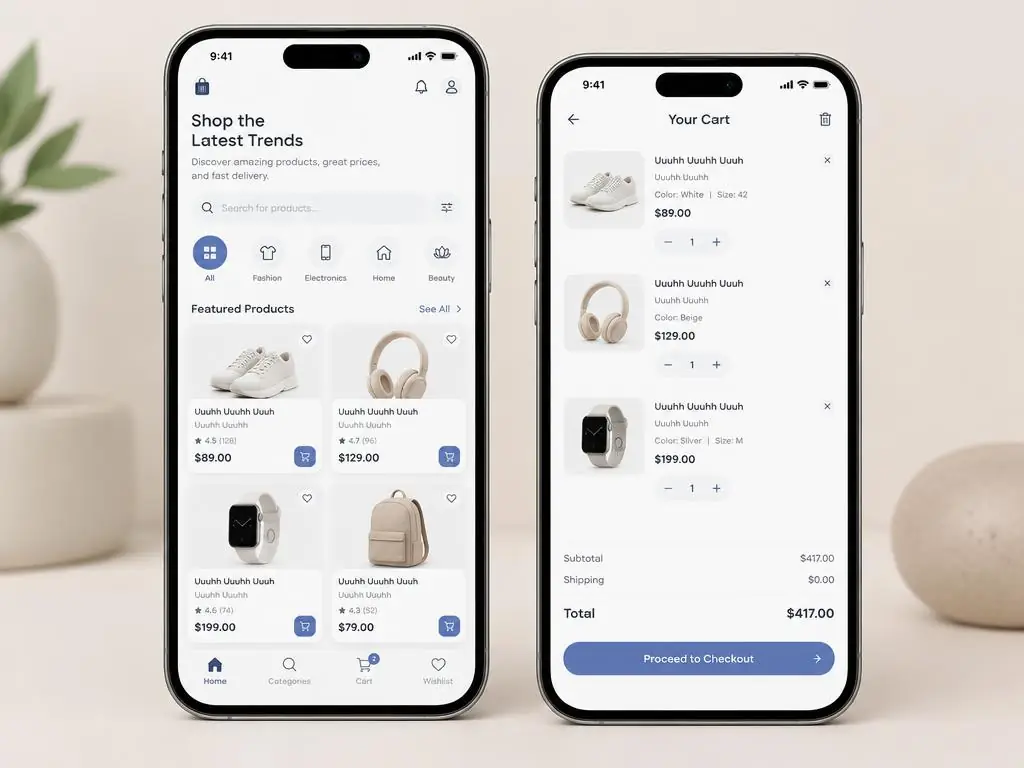
How much does mobile app development cost in 2026? The honest answer is that it varies a lot. A simple app that shows information and a contact form is a very different project from a delivery app with customer accounts, live order tracking, payments and an admin dashboard. Two apps that look similar on the surface can have very different price tags because of what happens behind the screen.
The final price depends on the type of app, the number of features, the platforms (Android, iOS or both), the quality of the design, the backend and database, integrations such as payments or maps, testing, and maintenance after launch. This guide explains each factor, shares MiloTech's reference price ranges, and helps you compare quotations from any mobile app development company — whether your business is in Douala, Yaoundé, elsewhere in Cameroon or abroad.
How Much Does Mobile App Development Cost in 2026?
There is no official average price for apps in Cameroon or worldwide, so we won't invent one. What we can share is MiloTech's own reference pricing. These ranges are starting points; your final quotation depends on your project's scope and requirements.
| App type | MiloTech reference price | Suitable for | Typical features | Complexity |
|---|---|---|---|---|
| Simple Mobile App | 1,200,000–1,500,000 FCFA | Small businesses, information apps, first versions | A few screens, contact, basic content, notifications | Low |
| Business Mobile App | 2,000,000–3,000,000 FCFA | Service businesses, bookings, customer portals | User accounts, bookings, admin panel, integrations | Medium |
| Advanced Mobile App | 3,500,000–5,000,000+ FCFA | E-commerce, delivery, marketplaces | Payments, maps, tracking, multiple user roles | High |
| Enterprise / Custom App | Custom quotation | Large organizations, complex workflows | Custom systems, advanced security, many integrations | Very high |
These are MiloTech starting/reference price ranges, not market-wide figures. Prices are set in FCFA; amounts shown in other currencies on our site are approximate.
Mobile App Development Cost by App Type
- Simple mobile apps — A small number of screens with mostly fixed content: company information, a service list, a contact or WhatsApp button and perhaps notifications. Good for a first presence on phones or for testing an idea.
- Business mobile apps — Apps that support how a business works: customer accounts, bookings or appointments, service requests, an admin panel for your team and links to tools you already use.
- Advanced mobile apps — Online stores, delivery apps and platforms with several user types (customers, drivers, vendors). They need payments, maps, real-time updates and a stronger backend, which increases design, development and testing time.
- Enterprise and custom mobile applications — Apps built around complex internal processes, larger user numbers, strict security or many integrations. These are always quoted individually after a detailed discovery phase.
What Determines the Cost of a Mobile App?
Every quotation is built from the work involved. These are the main elements that move the price up or down:
- Number of features — Each feature needs design, code, testing and upkeep. More features means more work.
- UI/UX design — Custom screens, branding and well-planned user journeys take more time than a basic layout, but make the app easier to use.
- Platforms — Android only, iOS only, or both. Supporting both adds testing and publishing work, even with shared code.
- Backend and database — Most apps need a server and database to store users, orders or bookings. This is often a large part of the work.
- User accounts and security — Sign-up, login, password recovery, permissions and data protection must be done carefully.
- Payments, maps and notifications — Mobile money or card payments, location services and push notifications each require integration and testing.
- APIs and third-party integrations — Connecting to existing systems, SMS or email services, or external APIs adds development and testing time.
- Admin dashboard — A panel for your team to manage content, users and orders is a project of its own.
- Testing and app store publishing — Testing on different devices and preparing store listings for Google Play and the App Store take real time.
- Maintenance and scalability — Planning for growth and future updates affects how the app is built from day one.
Android vs iOS App Development Cost
Android app development and iOS app development involve similar work: design, coding, testing and publishing. The difference in cost usually comes from the number of devices to test, store requirements and whether you need one platform or both.
In Cameroon and much of Africa, Android phones are very common, so many businesses start with Android. If your customers also use iPhones — or you serve international markets — building for both is often worth it. We don't quote fixed per-platform prices because the features matter far more than the platform.
Native vs Cross-Platform App Development
- Native development — Separate apps built specifically for Android and for iOS. It gives full access to each platform's features and can suit apps with demanding performance needs, but usually means more development work.
- Cross-platform development — Frameworks such as Flutter and React Native let one codebase run on both Android and iOS. This often reduces Flutter or React Native app development cost compared with two native apps, though some features still need platform-specific work.
Neither approach is always cheaper or better. The right choice depends on your features, budget, timeline and long-term plans, and we recommend one during discovery.
How Much Does an E-Commerce Mobile App Cost?
Ecommerce app development cost is usually higher than a simple information app because the app must handle real transactions and data. Common features include:
- Product catalogue, search and filters
- Shopping cart and checkout
- Payment gateway (mobile money and/or card)
- Customer accounts and order history
- Order tracking and notifications
- Admin dashboard and inventory integration
Most e-commerce apps fall into MiloTech's Advanced range; very large catalogues or marketplace features need a custom quotation.
How Much Does a Business App Cost?
Business app development cost depends on what the app does for your customers or team. Typical examples include booking and appointment apps, service request apps, customer portals, delivery apps, membership apps and internal apps for staff. Many fit MiloTech's Business range; delivery apps with live tracking usually move into the Advanced range.
What Is Included in Mobile App Development?
A MiloTech app project normally covers the following. Your proposal lists exactly what is included for your project.
- Discovery and requirements
- UI/UX design of the app screens
- App development, backend and database
- API and third-party integration where agreed
- Testing and client review
- Deployment to the app stores, basic documentation and handover
What Other Costs Should You Budget For?
Some costs are charged by third parties, not by the developer. Prices depend on the provider and your usage, so check current rates with each one:
- Apple App Store developer account and Google Play developer account fees
- Hosting, cloud services and domain name
- SMS and email services
- Payment gateway transaction charges
- Maps and other paid API usage
- Premium third-party software and ongoing maintenance
How Much Does Mobile App Maintenance Cost?
Apps need care after launch. Phone operating systems update every year, third-party services change, and users find bugs or ask for improvements. Typical maintenance work includes bug fixes, security updates, compatibility with new Android and iOS versions, API updates, performance improvements, backend upkeep and new features.
MiloTech's published maintenance plans are for websites. Mobile app maintenance cost depends on the app's size and the support you need, so it is quoted separately with your project.
How Long Does It Take to Build a Mobile App?
The app development timeline depends on complexity, how quickly decisions and content are provided, and how many changes are made along the way. As an illustration only: a simple app is usually the quickest, a business app takes longer, advanced apps take longer again, and enterprise projects are planned in phases. Your proposal includes a schedule based on your actual requirements.
The Mobile App Development Process
- 1.Client inquiry
- 2.Discovery and consultation
- 3.Requirements confirmation
- 4.Proposal and quotation
- 5.Approval and deposit — no deposit, no project commencement
- 6.UI/UX design and planning
- 7.Development
- 8.Testing
- 9.Client review
- 10.Revisions
- 11.Final approval
- 12.Deployment
- 13.Handover
- 14.Maintenance and support
How to Reduce Mobile App Development Costs
- Start with an MVP — Launch a first version with the essential features, then grow based on real user feedback.
- Prioritize essential features — Separate must-haves from nice-to-haves and avoid unnecessary integrations.
- Define requirements early — Clear requirements and fewer scope changes keep the project on budget.
- Build in phases — Spread the investment over several releases.
- Choose the right platform strategy — Cross-platform development or starting with one platform can reduce initial cost — but never cut security or testing.
Cheap App Development vs Professional App Development
A very low quotation can be tempting, and some low-cost options work for small, simple needs. The key is to compare what is actually included: design quality, security, testing on real devices, a backend that can grow, documentation, and support after launch.
An app that has to be rebuilt after a year often costs more in total than one built properly from the start. Professional and custom development focus on long-term costs, not just the first invoice.
How Much Should a Business Budget for a Mobile App?
There is no single correct budget. Start from your business objective, list the features you truly need, decide on platforms, and consider design, backend, integrations and maintenance. Then use MiloTech's reference ranges — Simple, Business, Advanced or Custom — as a guide, and keep some budget for third-party costs and post-launch support.
Questions to Ask Before Hiring a Mobile App Developer
- What exactly is included in the quotation? Is UI/UX design included?
- Is backend development included, and will the app work on Android and iOS?
- Who owns the source code and the app store accounts?
- How are revisions handled, and what happens after launch?
- Is maintenance available, and are third-party costs included?
- How are new features priced?
Why Businesses Invest in Mobile Apps
Businesses build apps for customer convenience, bookings, e-commerce and payments, customer loyalty, communication, automating internal operations and collecting useful data. An app is a tool: results depend on your offer, your customers and how well the app fits their needs — it is not a guarantee of growth.
Mobile App Development Services at MiloTech
MiloTech is a technology and digital marketing company based in Douala that develops practical Android and iOS apps around real business requirements, for clients in Cameroon, across Africa and internationally. We can also connect your app to a website and help you promote it once it's live.