
By MiloTech · Douala, Cameroon · October 2026
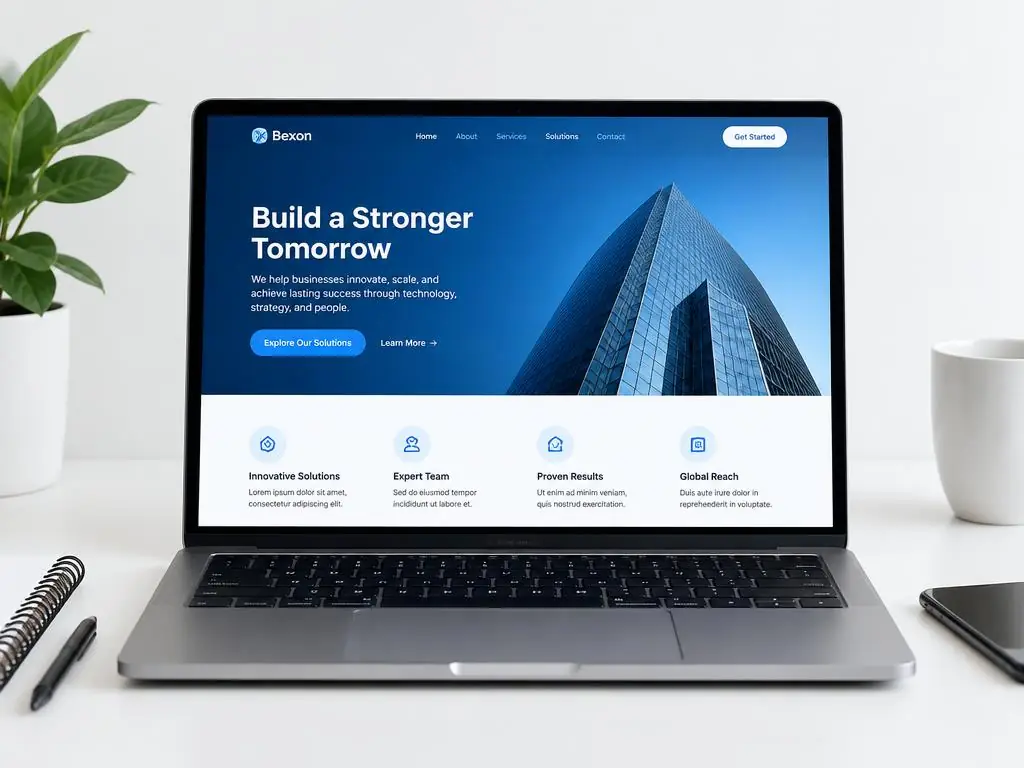
Choosing a web development partner is a business decision, not just a design choice. Your website is often the first place a potential customer checks before calling, visiting or paying. It should help them understand what you do, trust you, find the information they need and contact you without friction.
Whether your business is in Douala, Yaoundé or elsewhere in Cameroon, you will find freelancers, small studios and established agencies offering websites at very different prices. This guide explains how to choose a web development company in Cameroon by focusing on what actually matters: suitability, real work, a clear scope, technical quality, ownership, communication and support after launch.
Why Choosing the Right Website Developer Matters
The quality of a website affects far more than how it looks. It determines whether visitors can use it easily on a phone, whether the business looks credible, whether search engines can understand and show the pages, how easy it is to update, and whether it can grow when your business adds new services, products or languages.
Attractive visuals alone do not guarantee a successful website. A beautiful site that loads slowly, hides your phone number, cannot be edited without the original developer or was built without basic SEO can cost you enquiries and money over time. The right developer thinks about your customers and your goals, not only the homepage design.
10 Things to Check Before Hiring a Web Development Company
Use the following factors to evaluate every website development company in Cameroon you are considering. Each one comes with practical questions you can ask during your first conversation.
1. Portfolio and relevant experience
Review real, live projects where available, not just screenshots. Check whether the work fits what you need: a school needs different features from a restaurant or an online shop. Open the sites on your phone and try to find key information as a customer would.
- Can you show live websites similar to what I need?
- What was your exact role on each project?
2. Understanding of your business
A good developer asks before quoting: who your customers are, what you want them to do on the site, which services matter most and which features are essential. If a provider quotes a price without asking any questions, the quotation is likely a guess.
- What information do you need from me before giving a quotation?
- How will the site help my customers contact or buy from me?
3. Mobile responsiveness
Many visitors will see your site on a smartphone. Check the provider's previous work on a phone, not only on a desktop computer: menus, buttons, forms and text should be easy to use with one hand.
- Is mobile responsiveness included in the price?
- On which devices and browsers will you test the site?
4. SEO knowledge
SEO-friendly website development means building a site that search engines can crawl and understand. Ask about page titles, meta descriptions, heading structure, crawlability, internal links, performance and useful content. SEO setup is not the same as guaranteed rankings, but a site built without it starts at a disadvantage.
- What SEO setup is included at launch?
- Will you submit the sitemap to Google Search Console?
5. Website speed and usability
Check how the provider's sites behave: are they easy to navigate, readable, quick to show content and usable for people with different needs? Compressed images, clear navigation and accessible colours and text sizes are signs of careful work.
- How do you keep pages fast on mobile connections?
- How do you make the site accessible and easy to read?
6. Transparent pricing and scope
Request a written quotation that lists deliverables, exclusions, number of revision rounds and payment milestones. A clear scope protects both you and the developer and makes it possible to compare offers fairly.
- What is not included in this quotation?
- How are extra requests priced?
7. Ownership and access
Clarify who owns the domain name, who controls the hosting, whether you receive the source code or platform access, how credentials are shared and what happens at handover. Ideally, the domain should be registered in your business's name.
- In whose name will the domain be registered?
- Will I receive all logins and files at handover?
8. Security and backups
Ask what security measures are in place, such as HTTPS, updates and protected admin access, and whether backups and a recovery procedure are included or available as an option.
- How often is the site backed up, and who can restore it?
- Who applies security updates after launch?
9. Maintenance and support
A website needs care after launch. Understand how updates, troubleshooting and future changes will be handled, and whether support is included for a period or offered as a monthly plan.
- What support is included after launch, and for how long?
- How quickly do you usually respond to a problem?
10. Communication and delivery process
Confirm who is responsible for what, which content you need to supply, how review stages work, the expected deadlines and how approvals are given. Clear communication avoids most project delays.
- Who will be my main contact during the project?
- What do you need from me, and by when?
What Type of Website Does Your Business Need?
Not every business needs an expensive custom application. Start from what your customers need to do, then choose the simplest type of site that supports it.
- Basic business website — Suits small businesses and new ventures that need a credible online presence: a few pages explaining services, location, opening hours and contact options.
- Professional company website — Suits established companies, schools, NGOs and service providers with several services, team information, news and more detailed content, often in more than one language.
- E-commerce website — Suits retail shops and brands selling online. It needs product management, a cart, delivery options and, where required, payment integrations such as mobile money or cards.
- Booking or service-request website — Suits hotels, restaurants, clinics, salons and tourism businesses that need customers to book, reserve or request a quote online.
- Custom web application — Suits organizations with specific processes: client portals, dashboards, management tools or platforms where users log in. It requires more planning, testing and budget.
How Much Does Website Development Cost in Cameroon?
Website development pricing in Cameroon depends on scope, functionality, content, integrations, number of languages, design complexity, maintenance and technical requirements. For reference, these are MiloTech's indicative starting prices. They are not verified average prices across Cameroon.
| Website type | MiloTech starting price (FCFA) |
|---|---|
| Starter website (5 pages) | 250,000 |
| Business website (up to 10 pages) | 500,000 |
| Professional website (20+ pages) | 850,000 |
| E-commerce website | 1,000,000 – 1,500,000 |
| Custom web application | From 2,000,000 |
Depending on the proposal, domain registration, hosting, premium tools, payment integrations, content production, maintenance and other third-party services may cost extra. Always ask which recurring costs to budget for after launch.
Red Flags to Watch Out for When Hiring a Developer
- Unclear quotations with no list of deliverables.
- Promises of guaranteed first-page Google rankings — no one controls Google's results.
- No written project scope or agreement.
- No verifiable examples of previous work.
- Unclear ownership of the domain, hosting or accounts.
- No explanation of ongoing costs after launch.
- Pressure to pay before an agreed process is in place.
- Copying another company's website without permission.
- Claims of guaranteed sales or traffic.
Be fair in your judgement: a low price alone does not prove poor quality, and a high price alone does not prove quality. What matters is whether the scope, process and evidence of work are clear.
Questions to Ask Before Signing a Website Development Contract
- What exactly is included in the quotation?
- Who supplies the website text and images?
- Is mobile responsiveness included?
- What SEO setup is included?
- Who owns the domain and the website?
- What are the payment milestones?
- How many revision rounds are included?
- What happens if delivery is delayed?
- Is training or handover included?
- What support is available after launch?
- What recurring costs should I budget for?
How to Compare Website Development Quotations
Put each quotation side by side using the same criteria. Use the table below as a template and fill it in for each provider you contact.
| Evaluation factor | Provider A | Provider B | Provider C |
|---|---|---|---|
| Total price and payment milestones | — | — | — |
| Pages and features included | — | — | — |
| Mobile design and SEO setup | — | — | — |
| Domain, hosting and code ownership | — | — | — |
| Revisions and delivery timeline | — | — | — |
| Support, maintenance and recurring costs | — | — | — |
| Relevant portfolio examples | — | — | — |
Compare deliverables, ownership, support, SEO, functionality and long-term costs rather than choosing only the lowest price. A cheaper quote that excludes mobile design, hosting or support can end up costing more once those items are added later.
What the Website Development Process Should Look Like
Every provider works a little differently, but a typical professional workflow looks like this:
- 1.Initial consultation and business requirements.
- 2.Scope, proposal and quotation.
- 3.Agreement and deposit.
- 4.Content and asset collection.
- 5.Design and development.
- 6.Testing and client review.
- 7.Revisions and approval.
- 8.Final payment and handover.
- 9.Launch and post-launch support.
Why Consider MiloTech for Website Development?
MiloTech is a technology and digital solutions company founded in Douala in 2015. We design and develop websites and work alongside related services such as mobile app development, SEO, digital marketing, social media branding and online advertising, so your website can fit into a wider plan for reaching customers.
We start from your business requirements, agree on a clear written scope and keep communication straightforward throughout the project. If you are comparing providers, we are happy to discuss your needs and send a quotation you can compare with others.
Conclusion
The right web development company in Cameroon is the one that suits your business, shows real work, agrees a clear scope, builds technically sound and mobile-friendly sites, leaves you in control of your domain and website, communicates well and supports you after launch. Price matters, but it should never be the only deciding factor.